
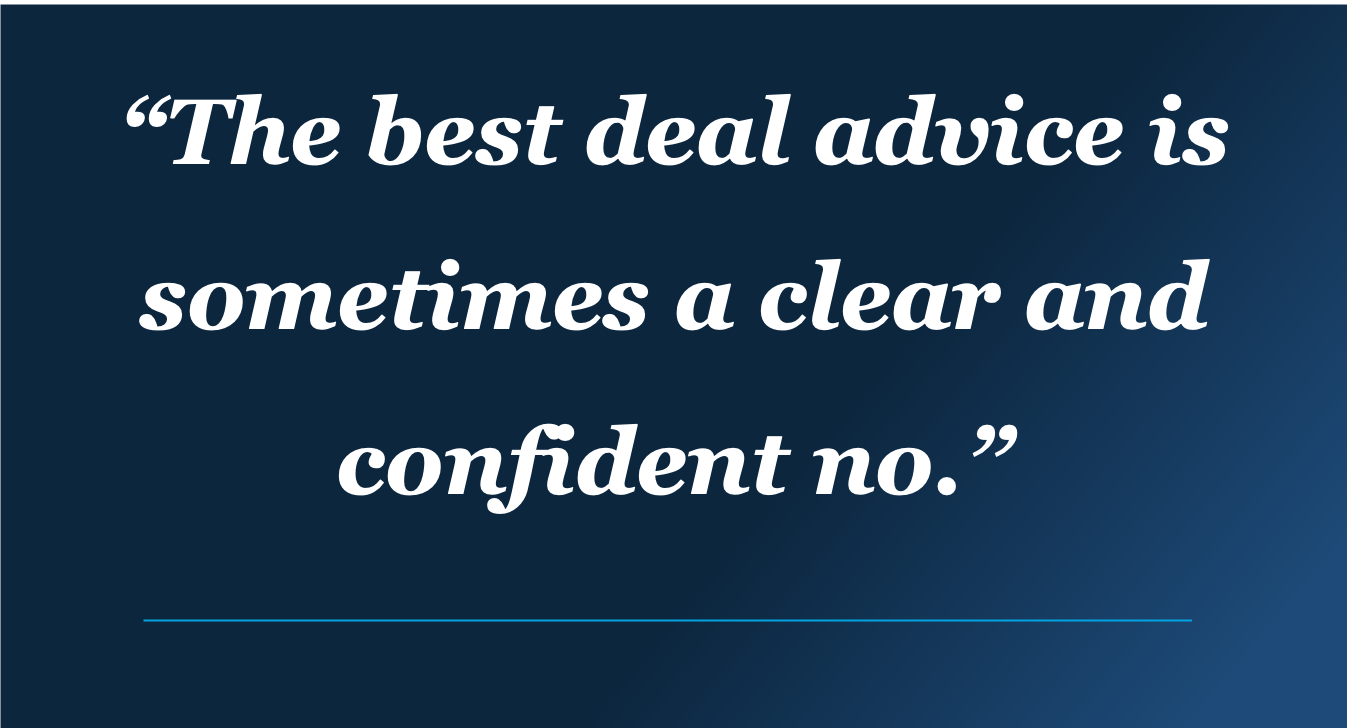
For many founders and CEOs, Private Equity represents opportunity: liquidity, scale, professionalisation, and a partner to support the next phase of growth. In the European mid-market, Private Equity has become one of the most active and visible ownership models, and for good reason. In the right circumstances, it can be an excellent solution.
Yet one of the most under-discussed realities of M&A advisory is this: selling to Private Equity is not always the right decision. And in some situations, proceeding with a PE transaction can permanently destroy value - financially, culturally, or personally.
This is not a popular message in an industry built around transactions. But for founders, CEOs, and professional investors who care about long-term outcomes rather than short-term headlines, it is an essential one.
The pressure to sell - and why it distorts judgement
Once Private Equity enters the conversation, momentum builds quickly. Advisors speak about market windows, valuation multiples, and buyer appetite. Peers share stories of successful exits. Investors make approaches that feel flattering and urgent.
In this environment, the question subtly shifts from “Should we do this?” to “Why wouldn’t we?”
That shift is dangerous.
Selling to Private Equity is not a neutral financial optimisation. It is a structural change in ownership, governance, incentives, and personal responsibility. For founders who have spent years building a business on their own terms, that change is profound - and often underestimated.
A trustworthy adviser’s role is not to accelerate momentum. It is to slow it down long enough to ensure that the decision is genuinely right.
When Private Equity is fundamentally misaligned
Private Equity works best when incentives are aligned: between investor, management, and the business itself. When those incentives diverge, problems emerge - sometimes immediately, sometimes years later.
One common misalignment arises when founders are primarily seeking certainty or personal relief, while Private Equity is underwriting aggressive growth and change. The transaction may close successfully, but tension appears soon after. Expectations differ. Pressure increases. What was meant to be a partnership becomes a source of frustration.
In such cases, the issue is not execution. It is fit.
Saying “no” early - before expectations harden - often protects both value and relationships.
When the business is not ready (yet)
Another frequent reason Private Equity may be the wrong decision is timing. Many strong businesses are simply not ready for institutional ownership.
This does not imply weakness. It often reflects success achieved through informal structures, founder-driven decision-making, or organic growth. While these characteristics are valuable, they can conflict with the requirements of Private Equity ownership, which demands transparency, scalability, and resilience.
Selling too early can result in:
discounted valuations,
intrusive governance,
or unnecessary loss of control.
In these situations, the most valuable advice an adviser can give is not to proceed - but to prepare. Time invested in readiness often creates options that were previously unavailable.
When independence has greater long-term value
For some founders, the business is more than an asset. It is a platform for influence, identity, and long-term independence. Private Equity, by design, introduces a defined exit horizon. Even with minority investments or staged transactions, that horizon exists.
If a founder’s core motivation is to maintain autonomy over strategy, pace, and culture, a PE partnership may introduce tension that cannot be resolved through structure alone.
In these cases, remaining independent - possibly with selective debt, minority capital, or organic growth - can be the superior outcome. But this option is rarely discussed once a sale process begins.
A disciplined adviser must be willing to articulate this clearly, even when it means advising against a transaction.
When valuation headlines mask structural risk
High headline valuations can be seductive. They create a sense of validation and success. But valuation alone is an incomplete measure of outcome quality.
Private Equity transactions are defined by structure: rollover equity, governance rights, leverage, earn-outs, and exit mechanics. In some cases, these elements shift risk disproportionately onto founders and management.
An adviser focused solely on closing a deal may celebrate a high multiple. A trustworthy adviser will ask harder questions:
What happens if growth underperforms?
How much control is truly retained?
Where does downside risk sit?
How realistic is the exit plan?
When the answers are uncomfortable, walking away may be the most rational choice.
To learn more about how Private Equity works, download our Report “Exit to Private Equity - An Insider Guide for Founders, CEOs and Professional Investors”.
When cultural and personal costs outweigh financial gain
Culture is often discussed emotionally, but its erosion has real economic consequences. Loss of key people, disengaged leadership, and internal conflict can rapidly undermine performance.
For founder-led businesses with strong internal identity, the wrong Private Equity partner - or the wrong timing - can damage culture in ways that are difficult to reverse.
Equally important are personal considerations. Founders frequently underestimate how their role will change post-transaction. Reporting obligations increase. Autonomy decreases. Pressure shifts from personal to institutional.
If these realities conflict with a founder’s aspirations or temperament, the transaction may succeed financially but fail personally.
A credible adviser must address this honestly, not gloss over it.
When alternatives have not been properly explored
Private Equity is one option among many. Yet once discussions begin, it can dominate the narrative.
In some cases, alternatives such as:
partial exits,
minority investments,
management buy-outs,
structured debt,
or simply delaying a transaction,
have not been fully evaluated.
Saying “no” to Private Equity does not mean rejecting all change. It means choosing the option that best fits the business and its owners - rather than defaulting to the most visible one.
Why advisers struggle to say “no”
Incentives matter. Many advisory models are built around transaction volume. Advisers are rewarded for closing deals, not for preventing them.
Saying “no” requires confidence, independence, and a long-term perspective. It also requires credibility: the ability to explain why a transaction is wrong, not just that it is.
At Dyer Baade & Company, we see restraint as part of our responsibility. Our role is not to sell Private Equity. It is to help clients decide whether Private Equity makes sense at all.
The long-term cost of the wrong decision
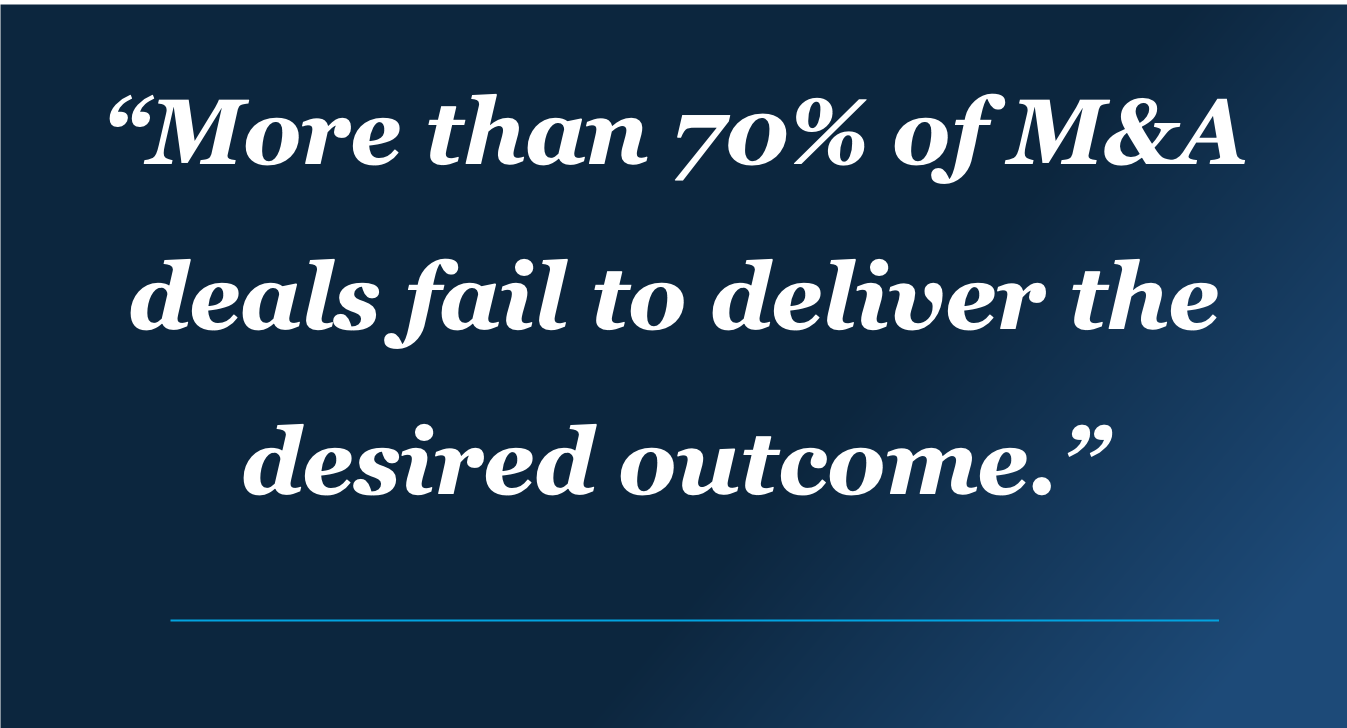
Founders rarely regret delaying a transaction. They often regret proceeding with the wrong one.
Regret manifests in many forms:
loss of influence,
strained relationships,
constrained strategic freedom,
or financial outcomes that fall short of expectations.
These costs are difficult to quantify, but they are very real. And once a transaction is completed, they are difficult to undo.
The value of saying “no” lies precisely in avoiding these outcomes.
The mark of a trustworthy adviser
Trustworthy advice is not always what clients want to hear. It is what they need to hear.
An adviser earns trust not by promising outcomes, but by demonstrating judgement - by knowing when to proceed and when to pause.
For founders, CEOs, and professional investors navigating one of the most consequential decisions of their careers, this distinction matters more than ever.
A final reflection
Selling to Private Equity can be transformative - for the right business, at the right time, with the right partner. But it is not a universal solution.
The most valuable advice an adviser can give is sometimes the simplest: not now, or not this way, or not at all.
For owners willing to listen, that advice often preserves not only value, but choice.
A quiet next step
If you are considering Private Equity - or finding yourself pressured toward it - a confidential conversation can help establish what is genuinely possible, what is premature, and what may be better avoided.
Not to sell. Not to start a process.
But to ensure that when you do decide, it is on your terms.
This article reflects Dyer Baade & Company’s experience advising founders, CEOs, and professional investors of privately owned businesses across Europe on Private Equity and alternative ownership strategies.