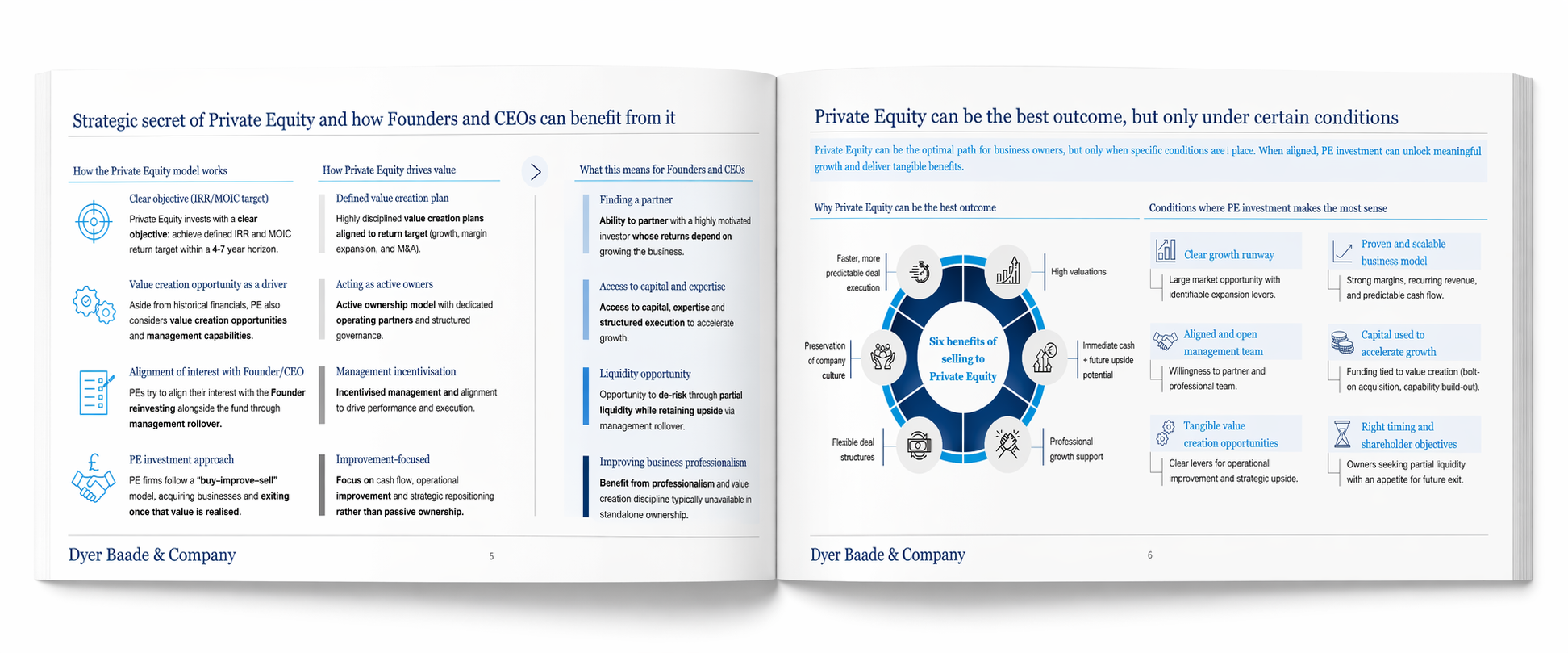
Download the Guide: Exit to Private Equity
What Founders and CEOs need to know before making the most important decisions of their career.
This practical report provides insight into the risks and opportunities of partnering with Private Equity firms across the UK and Europe. It is relevant for founders, CEOs and professional investors of mid-sized companies, i.e. companies that usually have:
more than €15m revenue; or
more than €5 million adjusted EBITDA; or
more than 50 staff members.
It is based on our practical deal experience from more than 40 transactions and is relevant for all key sectors, including business services, financial services, technology, healthcare, media, etc. and the insights are applicable to companies from all over Europe and the UK, regardless of whether they are located in a major capital or in a regional centre.
After reading the report, you will have a deep understanding of the risks and opportunities of exiting to Private Equity - knowledge that could be worth millions to you.
Free. Confidential. No obligation.

What you will learn from this report

How Private Equity works
Private Equity firms invest based on different strategies. Understanding these strategies will not only allow you to evaluate your options with more confidence, it will also allow you to have a clear strategic advantage in any future negotiation.

What a good deal looks like
A Private Equity will never disclose their hand. However, based on our deep knowledge of the sector, we show you how Private Equity values businesses, what determines the difference between a good deal and an average deal and how far you could push a deal.

How you can achieve a deal with Private Equity at market leading terms
In this report you will learn how you can negotiate better with Private Equity to ensure you do not only get a market leading valuation, but also a better deal structure, roll-over terms and downside protection.
What’s included in this free report?
How Private Equity really works (and why it sets the market)
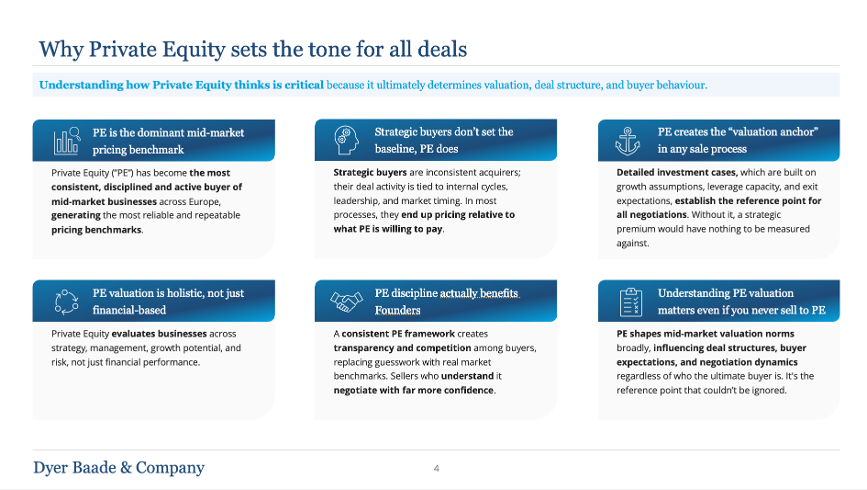
Private Equity has become the benchmark for valuation, deal structure, and negotiation dynamics across the mid-market.
Investors assess businesses holistically, focusing on strategy, growth potential, management quality, and risk, not just financial performance.
A consistent and disciplined investment framework creates transparency, competition, and stronger pricing outcomes for sellers.
Why Private Equity can unlock premium outcomes
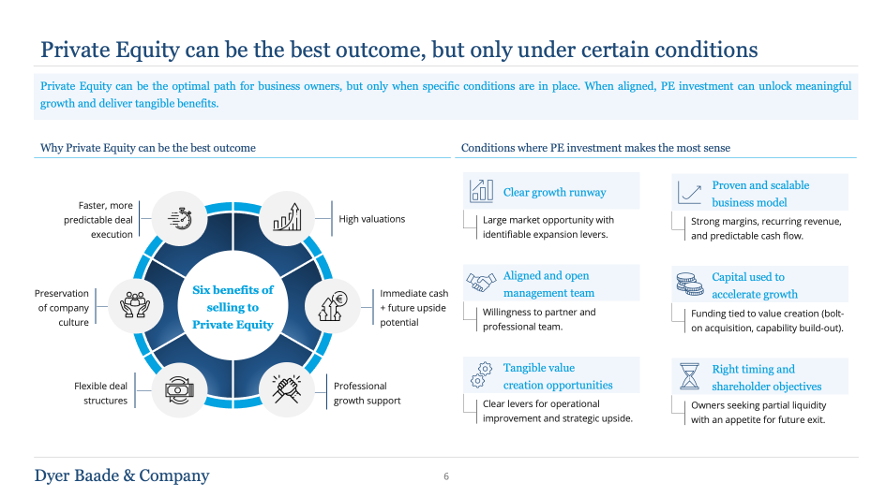
The Private Equity model is built on active ownership, driving value through growth, operational improvement, and strategic execution.
Founders and CEOs benefit from access to capital, expertise, and structured support to accelerate business performance.
Deals can provide partial liquidity while retaining future upside, aligning investors and management toward long-term value creation.
When the right conditions are in place, Private Equity can deliver higher valuations, faster execution, and more flexible deal structures.
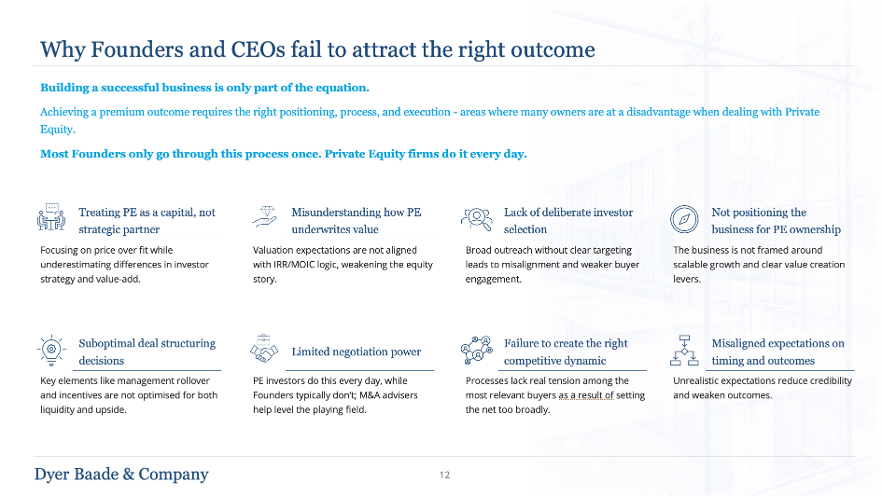
What separates successful exits from failed processes
Investor demand and valuation are driven by factors such as predictable cashflows, clear growth levers, strong management teams, and thorough preparation.
Common deal killers include weak positioning, lack of a credible growth plan, customer concentration, and poor process control.
More than 70% of processes fail to achieve their objectives, often resulting in financial, strategic, and reputational costs.
Achieving a premium outcome depends on positioning, selecting the right investors, and creating competitive tension throughout the process.
About the Author - Dr. Daniel Baade
Daniel is CEO and majority shareholder of Dyer Baade & Company - a leading M&A advisory boutique specialised on advising founders, CEOs and investors of privately owned businesses on their exit to Private Equity.
The firm is authorised and regulated by the FCA, and engineers premium outcome for its clients through its i) independent perspective, ii) strategic foresight, and iii) international reach.
Based in St. James, London, the firm has forget deep relationships with key Private Equity investors in the UK and across Europe, giving its clients a clear competitive advantage, that translates into industry leading KPIs:

+40
Transactions
~85%
of deals involve
Private Equity
+90%
Transaction success rate
+34%
average valuation premium achieved
Frequently asked questions
Who should read the report?
Founders, CEOs and investors of mid-sized companies, i.e. companies that usually have either more than €15m revenue, or more than €5 million adjusted EBITDA, or more than 50 staff members.
Why is this report special?
You’ll gain an insight into the ins and outs of dealing with private equity, based on our practical experience with leading PE firms in the UK and Europe.
Is the report useful, even if I’m not ready to sell?
Yes.
Is the report free?
Yes, the report is free without any obligation.
What do I need to do to get the report?
Just fill out the form (takes less than 1 minute) and you can download the report as a pdf straight away.